Connecting with 90 business partners to improve B2B processes
\03
Street Baker, largest macaron production company in Central Asia, is a supplier to local businesses, such as coffee shops and restaurants.
By identifying inefficiencies in the workflows, businesses may decrease order delays and mix-ups while boosting productivity and customer satisfaction.
My aim to identify potential opportunities of a small to medium-sized enterprise to scale and grow. The research gathered information about their preferences, experiences and expectations when it comes to Street Baker products. Furthermore, interviews with the confectionery studio's senior management and its business partners were conducted in order to obtain insight into the logistics of B2B operations and suggestions for improvement. Goal is to identify effective strategies and techniques that can be used by Street Baker to improve the efficiency of its B2B systems. The company seeks to strengthen its B2B processes and continue to be a dessert supplier of choice for local businesses.
About Company
The Street Baker company creates innovative and popular desserts and has become one of the leading macaron providers in Central Asia.
61,000 macarons were produced throughout December, 2022
At the moment, the company has more than 90 partners in Bishkek, as well as several in the regions, and the list of partners is regularly updated.
Challenge
Poor logistics
Using WhatsApp as a primary communication system has caused numerous problems for Street Baker, including a lack of organization and tracking, privacy concerns, and communication breakdowns. Additionally, poor logistics damage a company by leading to delays in fulfilling orders, dissatisfied partners, negative reviews. It is imperative for Street Baker to invest in a more efficient and secure B2B system to avoid these issues and ensure the smooth running of their business operations.
My Role
I was a member of the research product team focused on improving B2B processes.
My responsibilities included collaborating with B2B partners, implementing new strategies, and developing methods to streamline their purchasing experience.
Collecting data
Data collection through interviews, a survey and observations. Interviews will be conducted with a senior manager of the Street Baker company as well as its partners to gain insights into the challenges faced by Street Baker in optimizing its B2B processes. The survey will be distributed to business partners to collect quantitative data on their perceptions of the company's B2B systems.
Data Analysis
Qualitative data from interviews and observations will be analyzed using thematic analysis to reveal key themes and patterns linked to the challenges and opportunities of improving B2B processes in the context of Street Baker. Quantitative data from the survey will be analyzed using descriptive statistical methods to gain a better understanding of business partners' perceptions of the company's B2B operations.
Main research
An anonymous survey of Street Baker’s business partners was organized to collect quantitative information about their preferences, experiences, and expectations regarding the company and their ordering process.
In the survey, five blocks of questions were organized to collect the data.
create a portrait of a business partner (the location of the branch; the number of branches supplied with the products; the duration of cooperation with Street Baker).
determine the level of satisfaction of the partners and their preferences.
arising problem situations and how effectively they are solved.
ordering process (overall efficiency, responsiveness, literacy, and friendliness of the managers' answers).
ways to communicate with Street Baker’s managers during the ordering process, as well as the potential idea of creating a single platform for business partners.
The final sample size consisted of 90 people which was established based on the number of existing business partners of Street Baker.
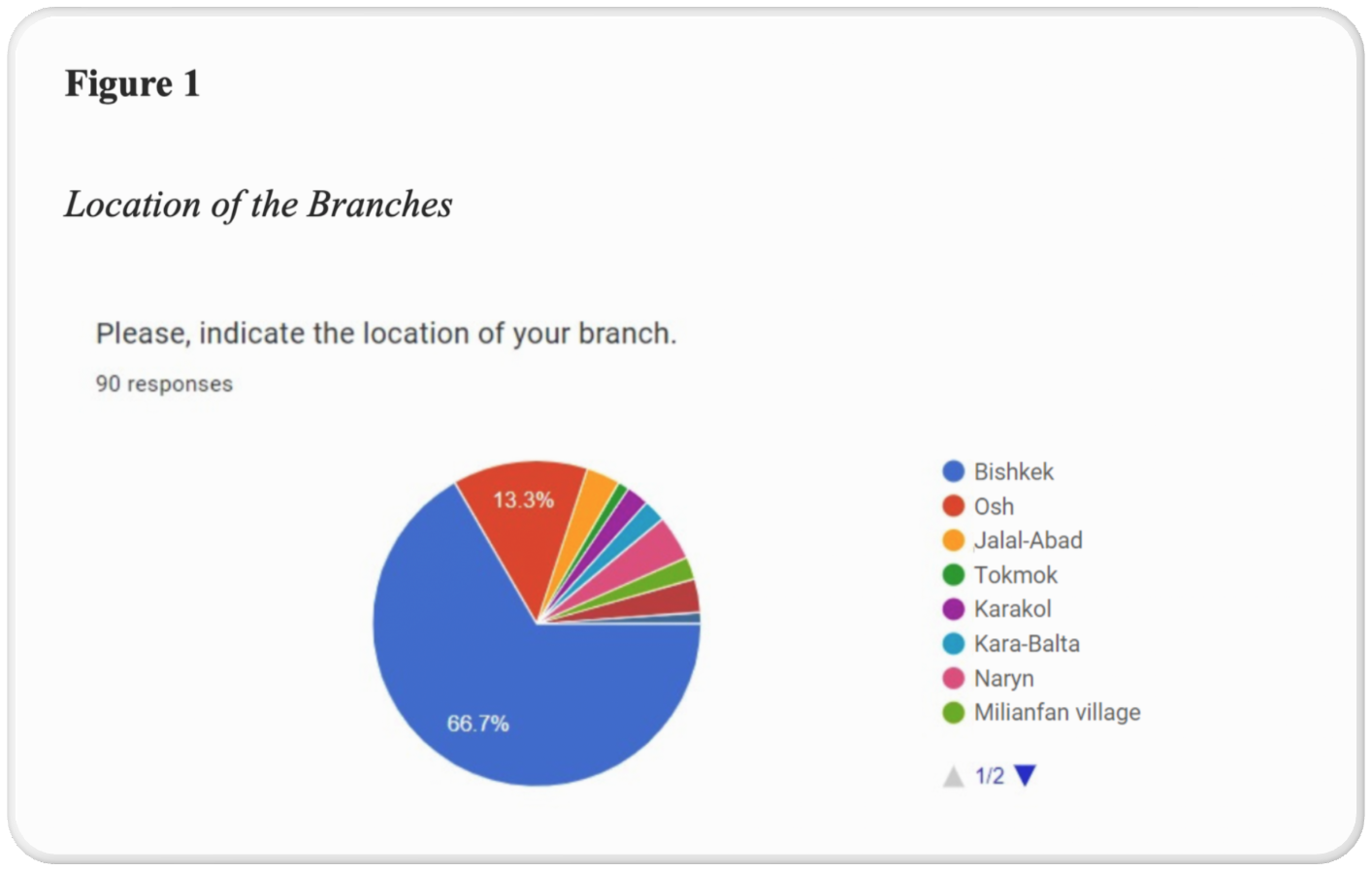
According to Figure 1, all respondents have their branches in Kyrgyzstan, with the majority in Bishkek (66.7%), followed by Osh (13.3%), Naryn (4.4%), Jalal-Abad (3.3%), Balykchy (3.3%), Karakol, Milianfan Village, Tokmok, Kara-Balta, and Kant (totaling to 8.8%). Street Baker began developing a partner network in the capital, respectively, most of the partners are located in Bishkek. Over time, businesses from other cities became interested in the products and concluded an agreement to partner with Street Baker and supply macarons to their branches.
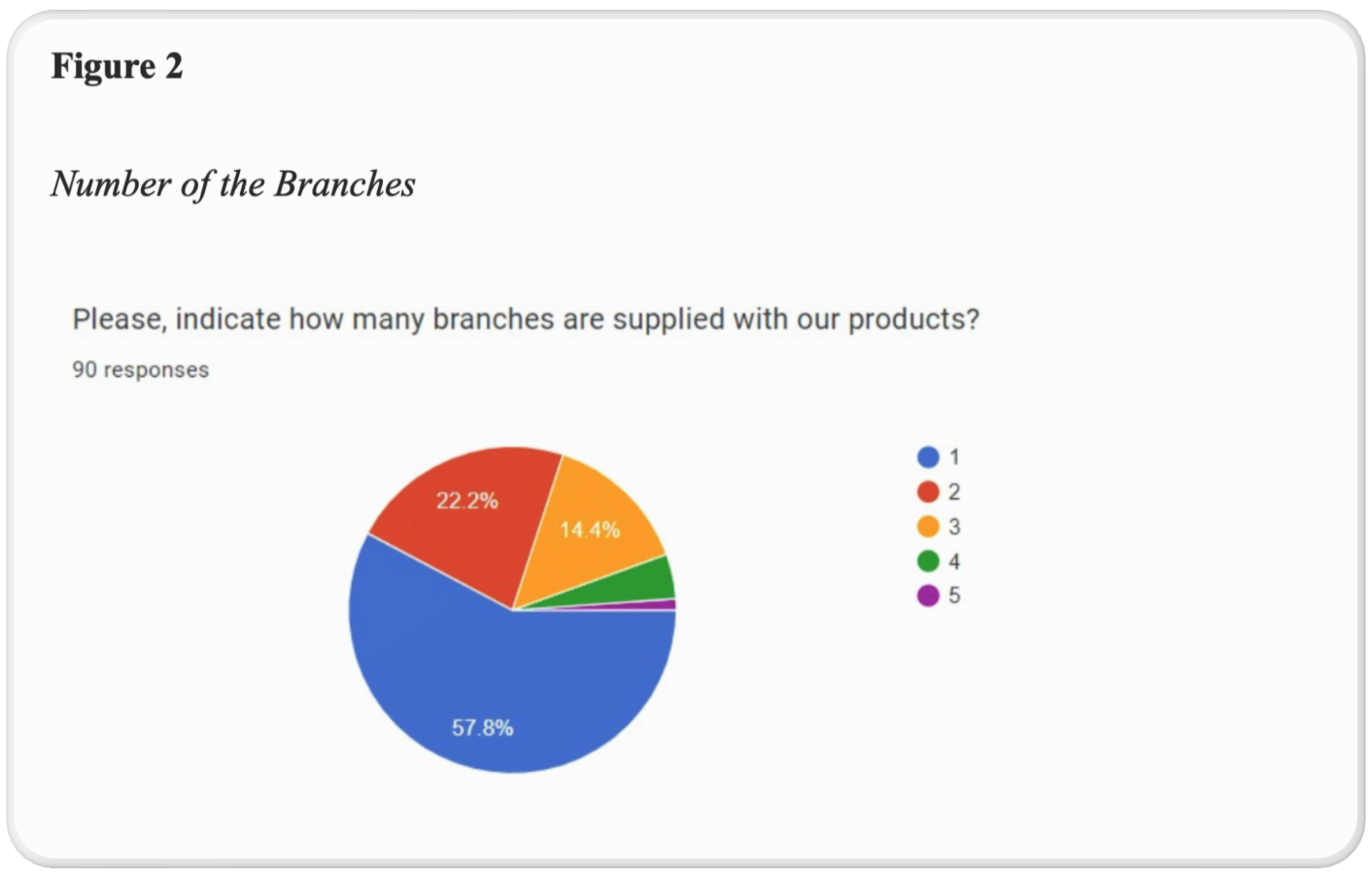
Figure 2 shows that the majority of respondents have only one branch supplied with Street Baker's products (57.8%), then a significant number has two (22.2%) branches, while some have three (14.4%), four (4.4%), and five (1.1%) branches supplied with macarons. This indicates that businesses trust Street Baker and provide as many of their branches with macarons as possible.
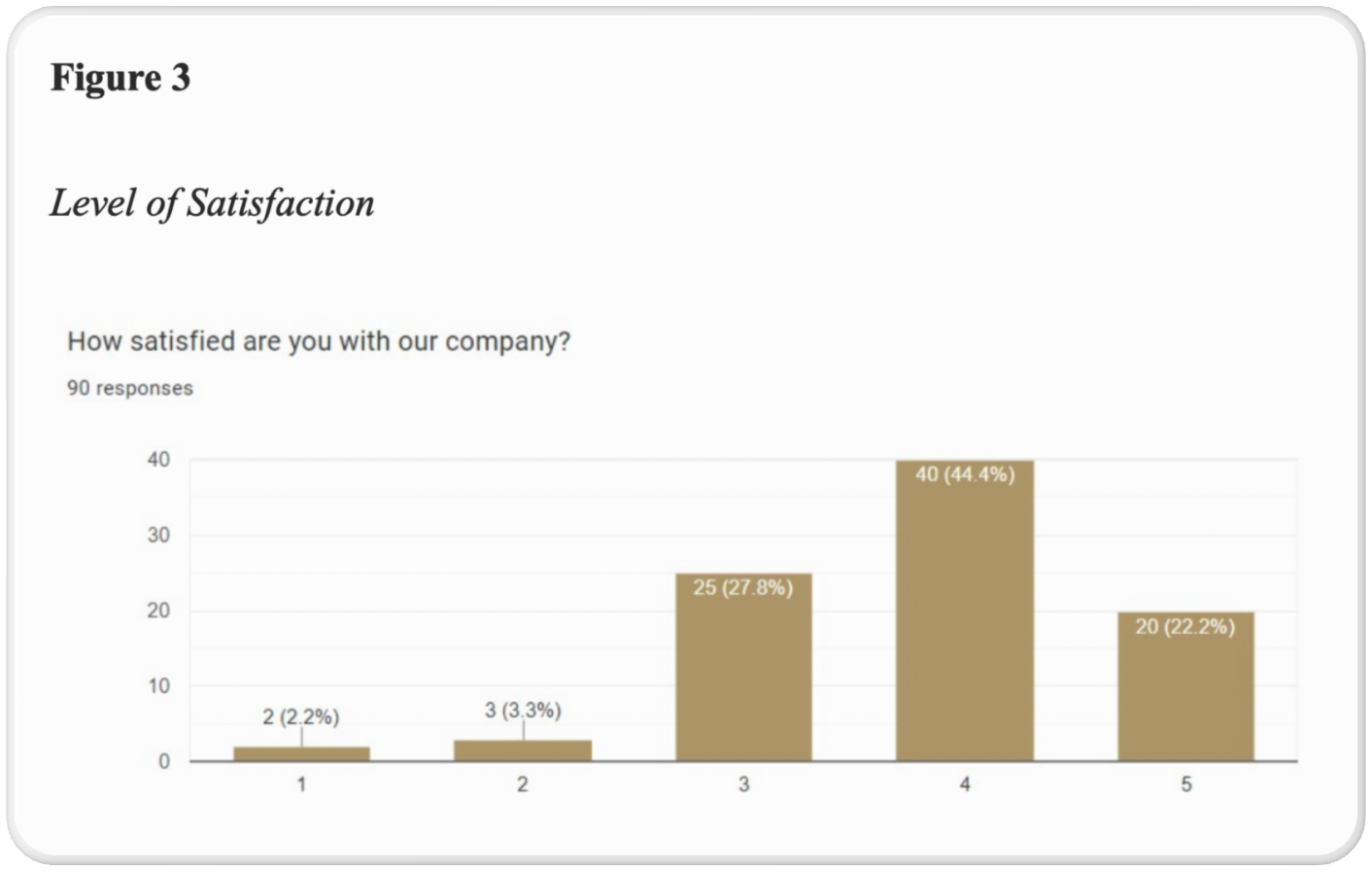
As can be seen in Figure 3, that all respondents reported being satisfied with the company, with a mean score of 3.8 out of 5. Most respondents (44.4%) rated their satisfaction at 4, followed by 27.8% of people rating at 3, and 22.2% of respondents rating their satisfaction with the company at 5. Some respondents gave the ordering process a rating of 1 (2.2%) and 2 (3.3%) which indicates their dissatisfaction and the need for improvement.
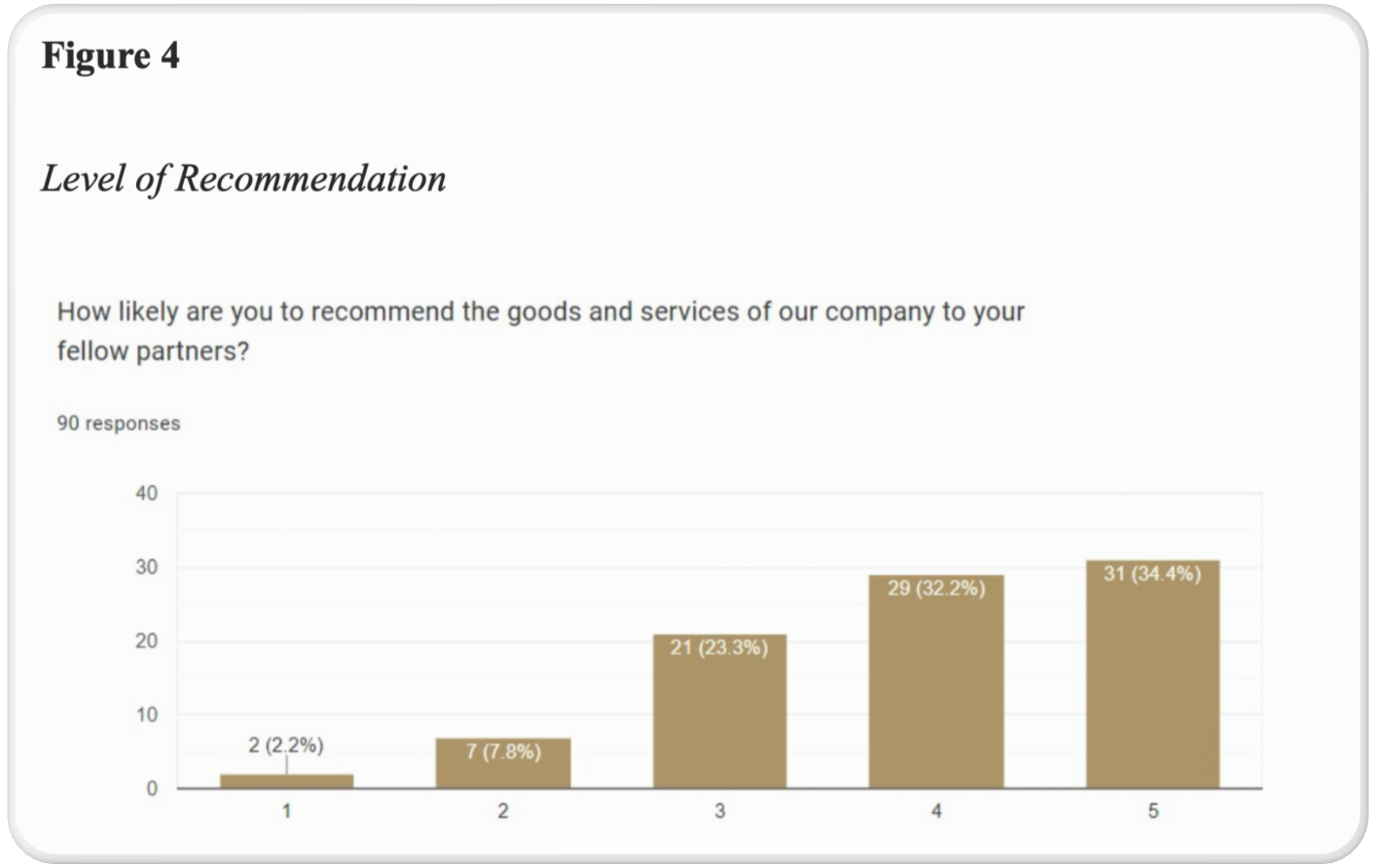
Additionally, the respondents are very likely to recommend Street Baker's products and services to their fellow partners, with a mean score of 3.9 out of 5 (Figure 4). The majority of people gave a score of 3 (23.3%), 4 (32.2%) or 5 (34.4%) showing their intention to recommend. A few respondents rated at 1 (2.2%) or 2 (7.8%) meaning that they are unlikely to recommend. This suggests that the partners are generally satisfied with the goods and services provided by Street Baker and would be willing to recommend them to their fellow partners.
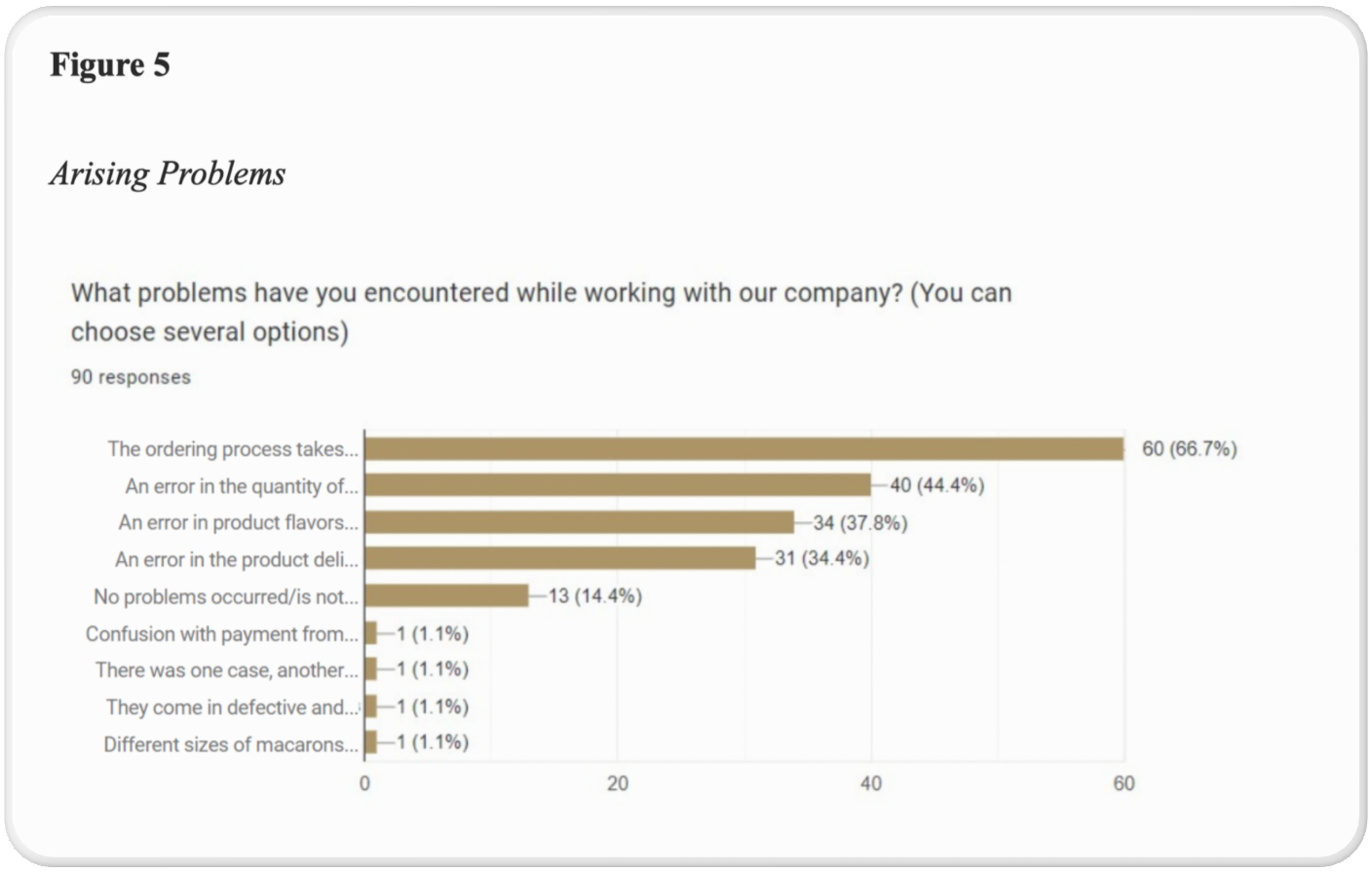
As can be seen in Figure 5, business partners have faced the following challenges such as errors in: product quantity while ordering, product delivery date, product flavor selection, payment from the accounting department, and different macaron sizes. Furthermore, one partner noted a case where another person's order was shipped, i.e. a mix-up in orders. In light of these findings, it would be beneficial for the company to focus on enhancing the ordering process and implementing measures to closely monitor product quality and ensure compliance with customer orders
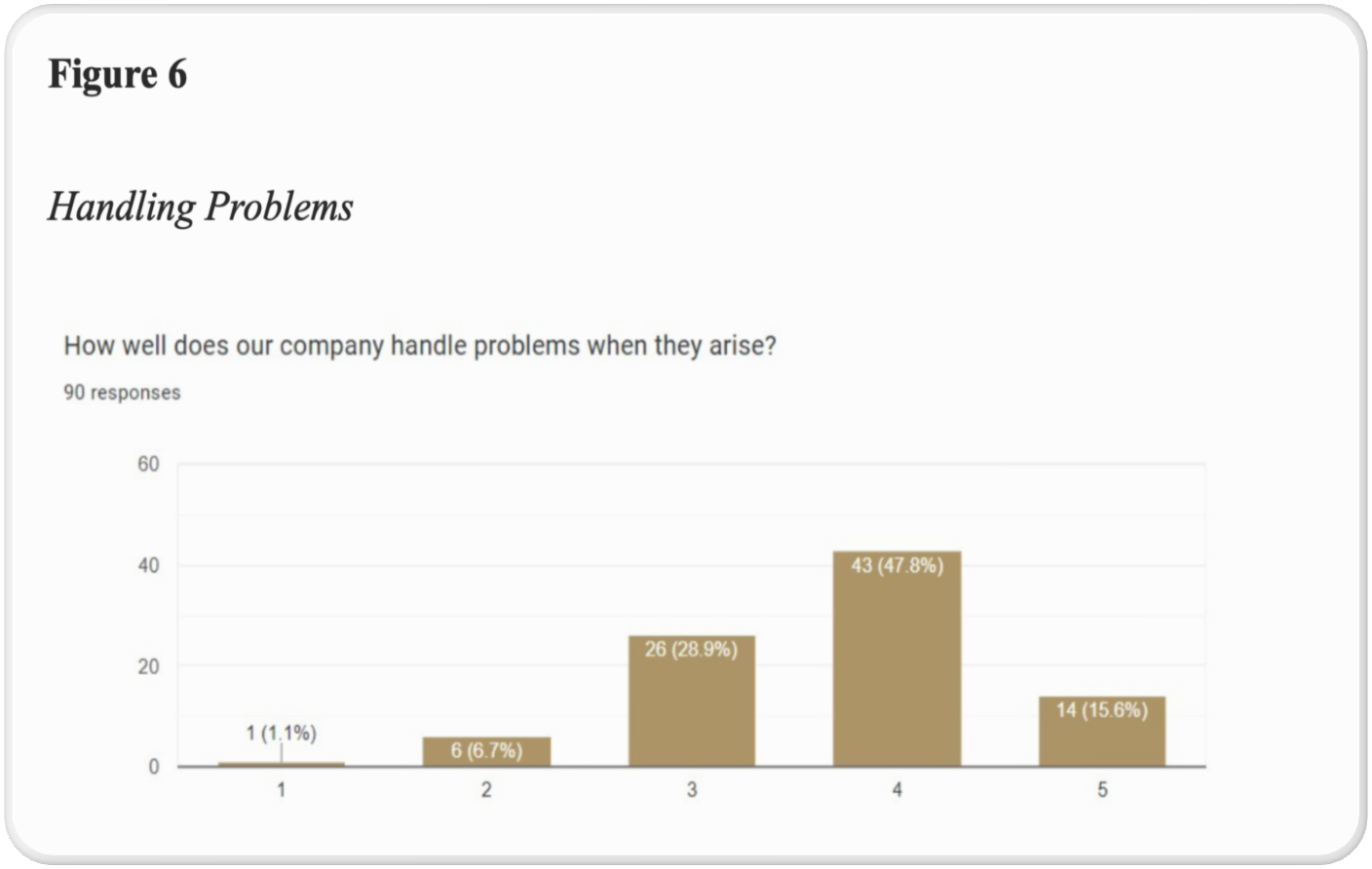
Following the question about arising problems during the ordering process, partners were asked to rate how well problems were solved. According to Figure 6, most respondents (47.8%) rated this criteria with a high score of 4 and mean score of 3.7 out of 5, indicating a good job at solving problems. However, there are a few responses (28.9%) with lower scores of 3, 6.7% of score 2 and 1.1% of score 1, indicating possible problems in this area, such as confusion about payment, different product sizes, order discrepancies, etc. Altogether, the company can use these responses to improve its problem-solving efforts to ensure a high level of customer satisfaction.
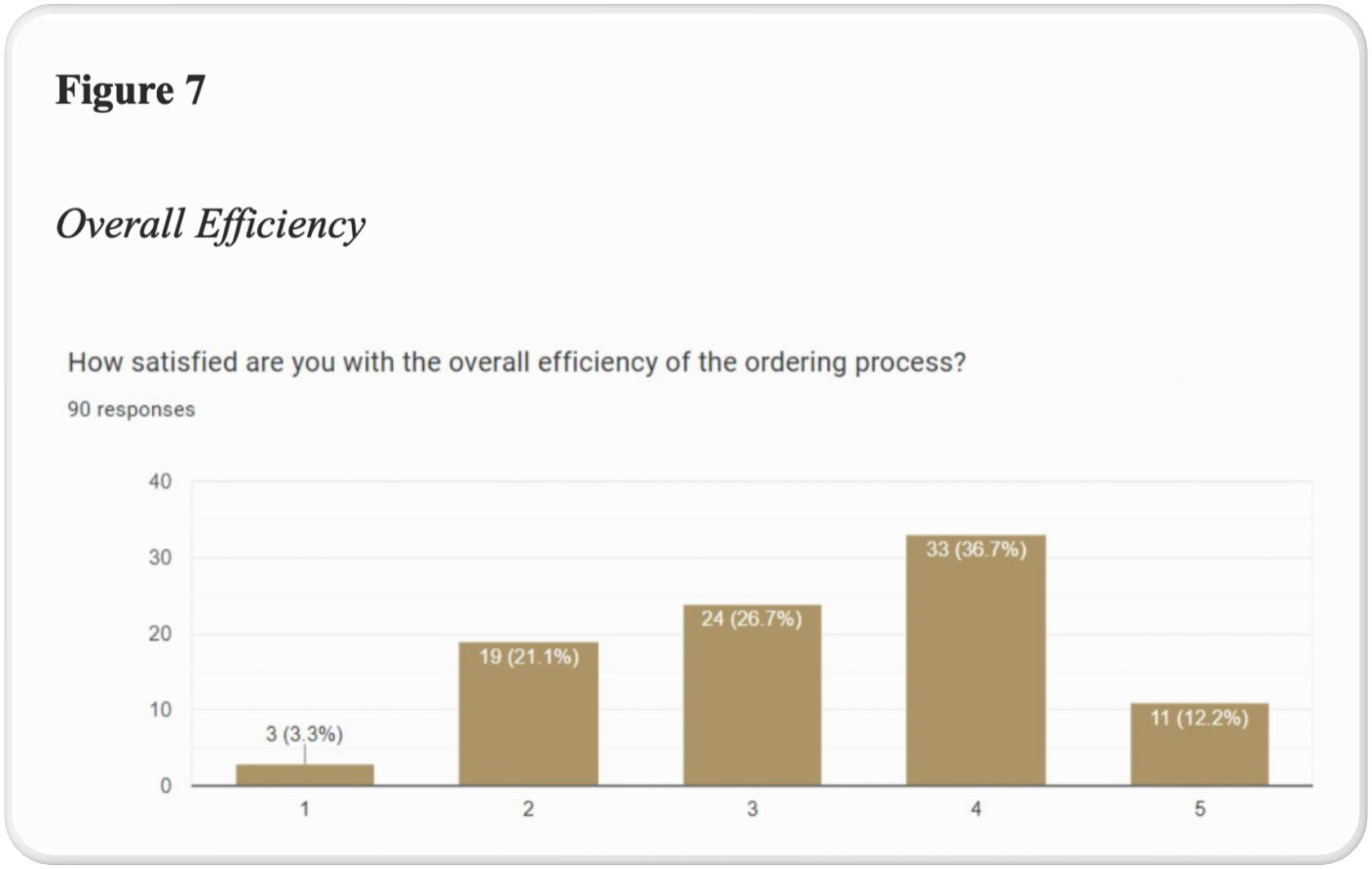
According to Figure 7, the majority (36.7%) of responses indicated high satisfaction with the overall efficiency of the company's order processing, rating this criteria at 4. A mean score for this parameter is 3.3 out of 5. However, there are a significant amount of responses rating the overall efficiency at 3 (26.7%), at 2 (21.1%), and at 1 (3.3%). This suggests some problems or shortcomings in the ordering process. The company can address these responses and improve its order processing to satisfy all partners.
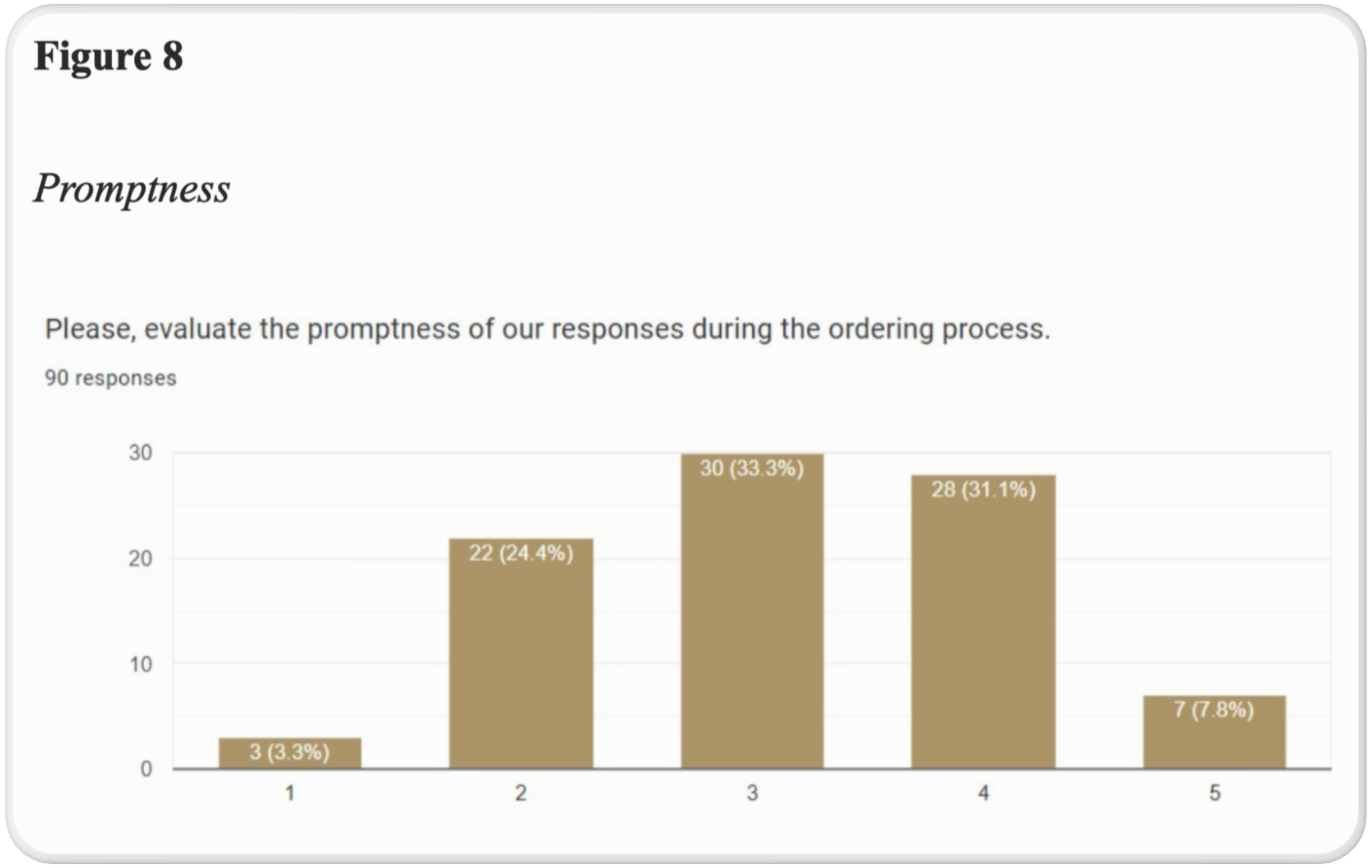
Next, respondents evaluated the promptness of responses during the ordering process, where the average score for this set of answers is 2.9, which can be considered a fairly low score for the responsiveness (Figure 8). It is worth mentioning that the majority of answers were scored at 3 and below (61%), indicating problems in the promptness during the order placement. By addressing these concerns, it may be possible to increase consumer satisfaction with the responsiveness of Street Baker’s managers.
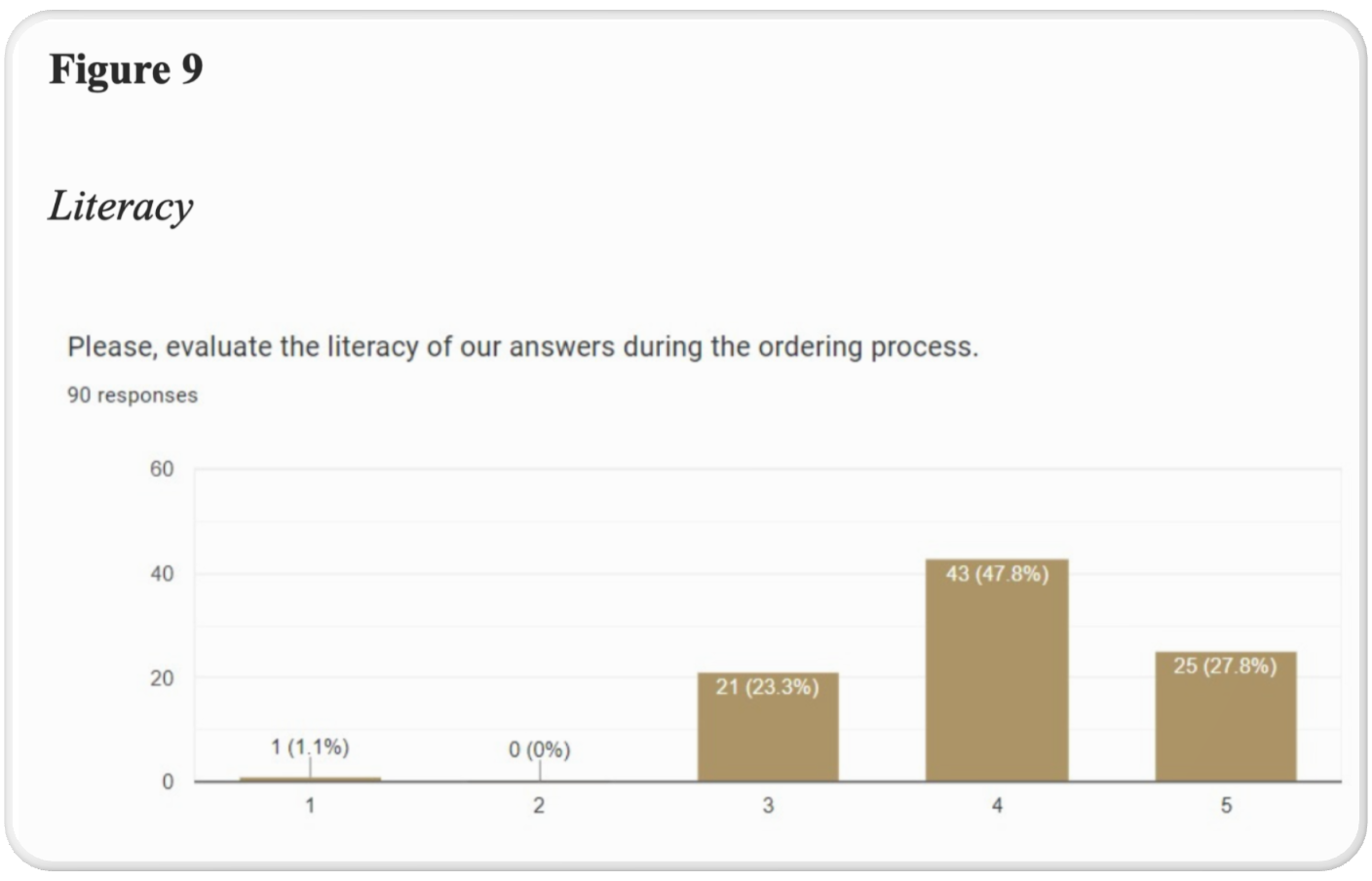
Regarding the literacy of the answers, the average score for this criterion is 4.0 out of 5, which can be considered a high score (Figure 9). This suggests that there are no problems with this criteria in most cases. However, it is worth paying attention to responses where a score of 3 was given (23.3%) and one response with a score of 1. This may indicate a literacy problem that needs to be investigated and addressed. To make sure that partners can comprehend and follow the ordering procedure, it is crucial to maintain high literacy levels. This reduces the possibility of misunderstandings or mistakes arising from unclear or confusing messages.
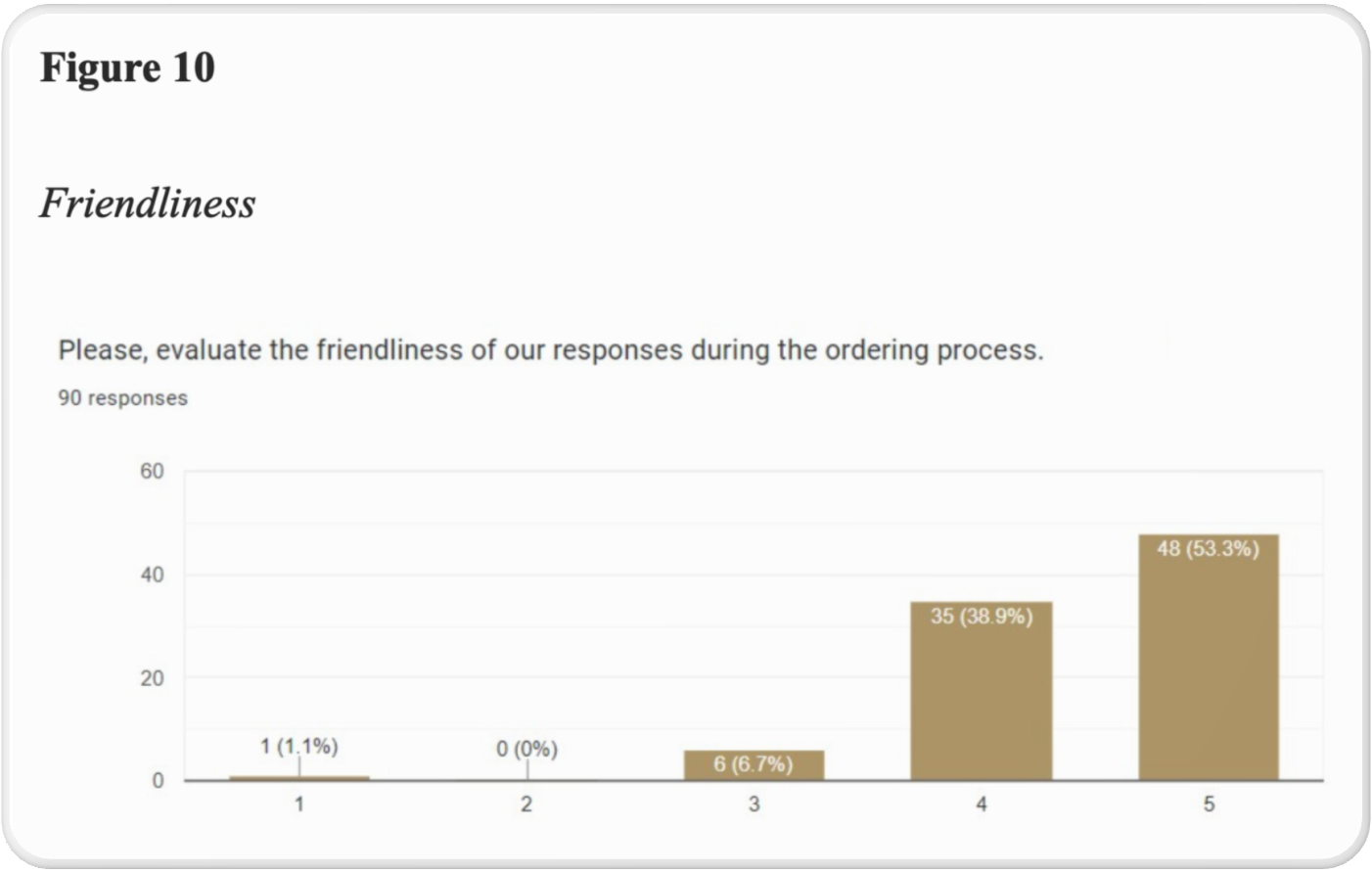
The highest score was given to the parameter of the friendliness of answers during the ordering process with a mean score of 4.4 out of 5 (Figure 10). It should also be noted that most of the answers (53.3%) were evaluated by the maximum score and 38.9% of respondents evaluated at 4, which indicates that the partners are highly satisfied with the friendliness of the answers. Thus, it can be concluded that the company's employees successfully create a friendly atmosphere during order placement, which has a positive effect on customer satisfaction and their impression of the company.
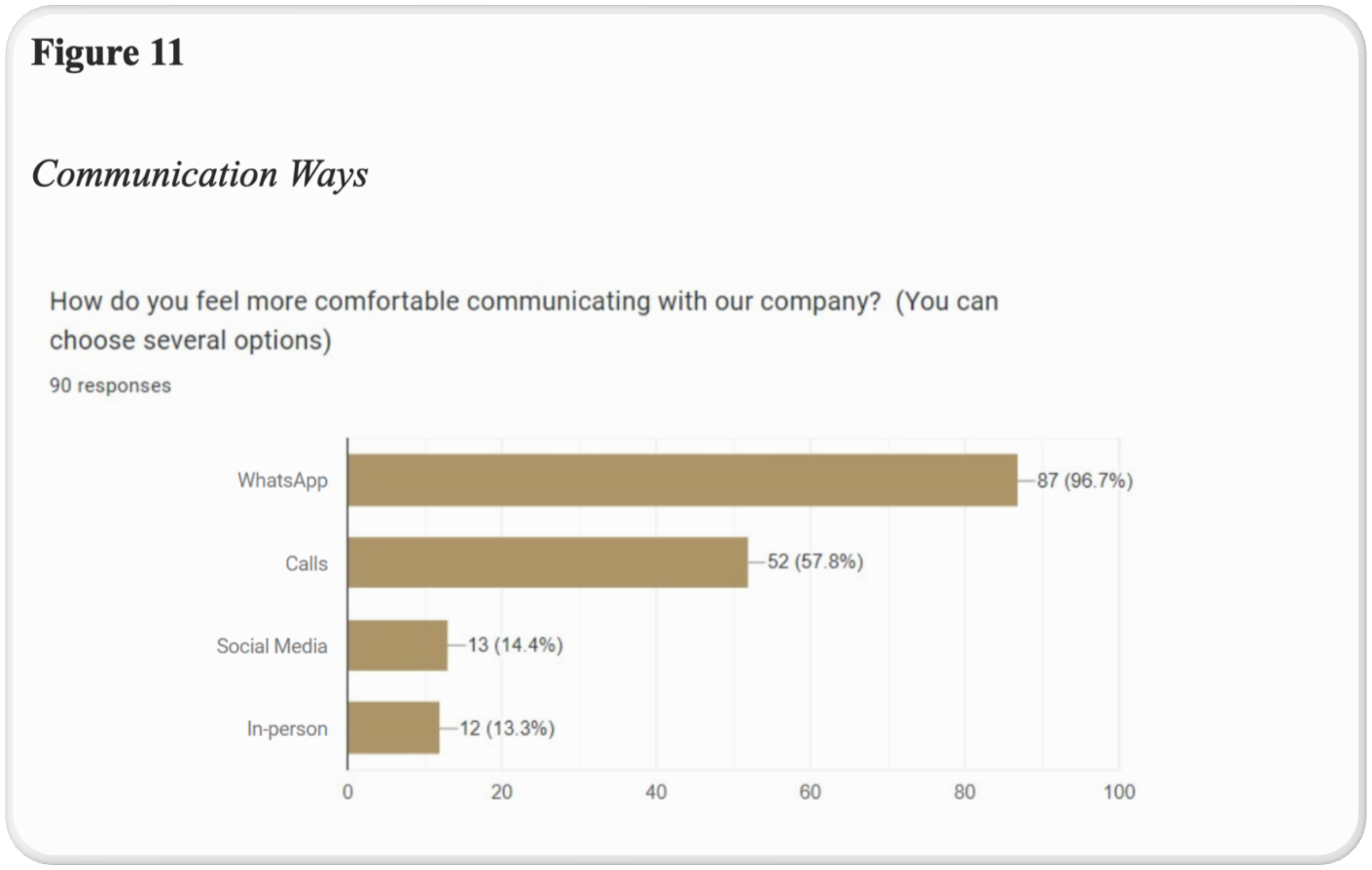
The last block of questions about the way business partners communicate with Street Baker showed that WhatsApp messenger is the most frequently used medium - it is indicated in 87 answers out of 90 (Figure 11). Besides, many partners choose additional methods of communication, such as calls (57.8%), social networks (14.4%), and in-person (13.3%). This means that the company should provide partners with the ability to reach them through a variety of channels in order to meet their communication needs. WhatsApp is a messaging tool that makes communication simple and in a written form, phone calls allow for immediate dialogues that can effectively address problems. While social media can be a practical method to remain up to speed with a company's most recent news and changes, and meeting in person can be a helpful approach to establish relationships and develop trust.
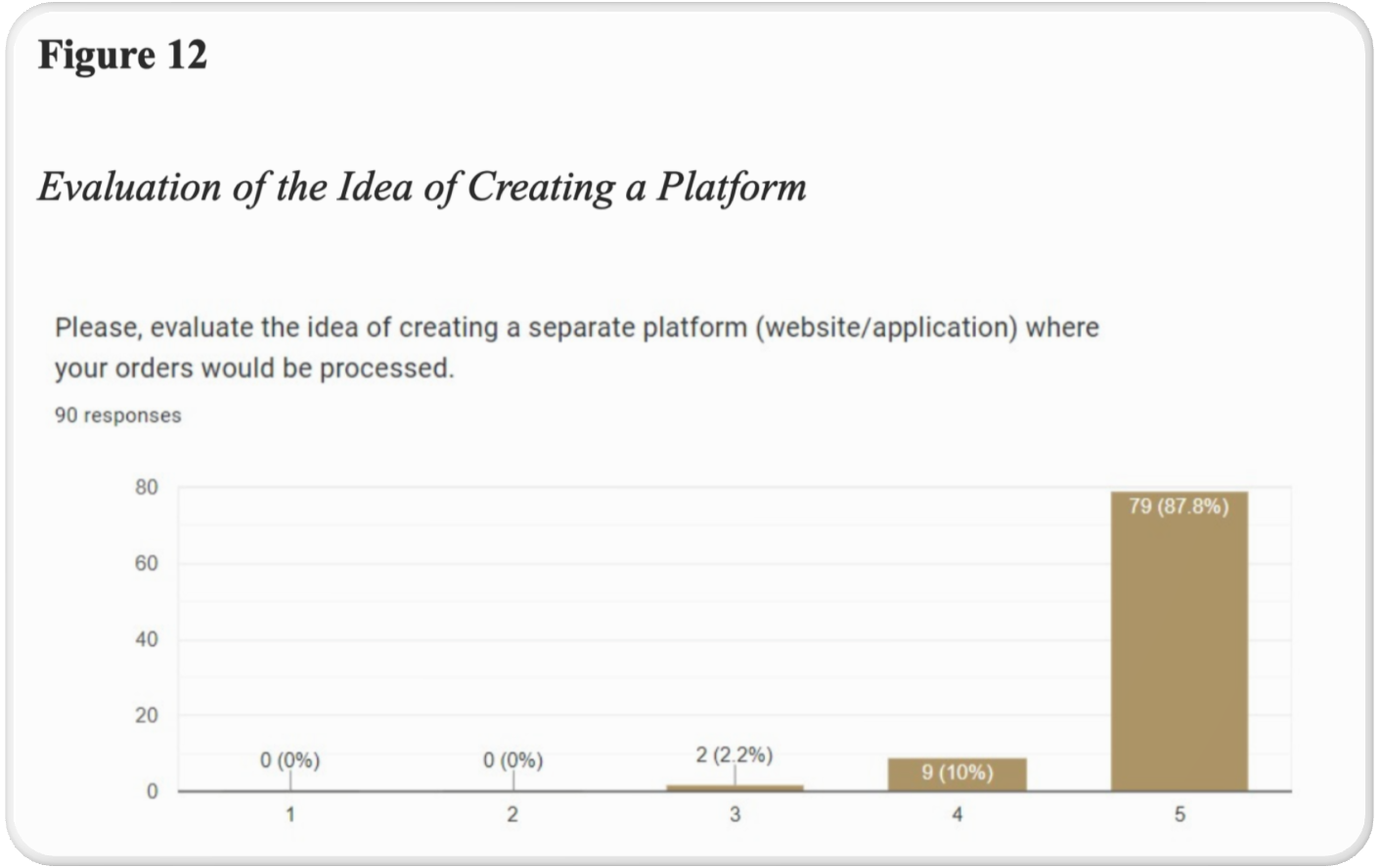
Finally, partners were asked to evaluate the idea of creating a separate platform for order placement (Figure 12). The majority of respondents (87.8%) gave a maximum score to the idea - 5 points. 10% of respondents gave 4 points and 2.2% of respondents gave 3 points. This suggests that all partners are positively oriented towards using the platform which allows to simplify the ordering process and get the information that they need faster. Thus, it can be concluded that the idea of creating a separate platform for order placement has its supporters among the partners.
Furthermore, among the responses to the survey, one partner was chosen who revealed the presence of difficulties in the B2B system.
Summarizing the whole interview, the following seven insights were identified:
Trend-consciousness: The partnership with Street Baker was initiated by the business partner to tap into the trend of macarons, which were gaining popularity among consumers. This shows the importance of being aware of market trends and being able to adapt to meet customer demands.
Customer satisfaction: Since introducing Street Baker's macarons, the business partner has seen an increase in the number of satisfied customers and a corresponding increase in foot traffic to their coffee shop. This emphasizes the importance of offering quality products that meet customer demands to drive business growth.
Demand-driven ordering: The business partner orders macarons based on customer demand, rather than ordering equal quantities of each flavor. This highlights the importance of knowing customer preferences and being able to tailor business operations accordingly.
Communication challenges: The ordering process is currently slow and inefficient due to the use of WhatsApp as a communication tool, resulting in mistakes such as wrong orders and incorrect delivery dates. This highlights the importance of having a streamlined communication process to avoid such issues and improve overall efficiency.
Payment challenges: The business partner has faced payment issues in the past, such as errors in accounting, which emphasizes the importance of having a secure and reliable payment process in place to avoid such issues.
Delivery challenges: The interview highlights some challenges related to the delivery process, such as the lack of a tracking system to monitor the status of the order during delivery. This emphasizes the importance of having a reliable delivery system and communication channel between the delivery team and the business partner to ensure timely delivery and avoid potential customer dissatisfaction. Implementing a tracking system or partnering with a reliable delivery service provider could potentially help mitigate these challenges.
B2B system optimization: The business partner is enthusiastic about the idea of having a single platform for ordering, which would significantly reduce existing problems and optimize the ordering process. This shows the importance of utilizing technological advancements to streamline business operations and improve overall efficiency.
Solution
If the company considers mobile applications as a possible solution, there are 87.8% of respondents who will be interested in creating such a platform. It highlights the importance of having a new mobile application which will lead in overall satisfaction, allowing the best user experience and optimization of the ordering process and more.
Here the product objective is to consider:
To develop a user friendly application that has features such as quick order processing and is easy to use.
To implement real-time delivery for tracking orders in the application.
To allow users for analytics features that will help to get detailed information with data and graphs for future purchases and other plannings.
User friendly and interaction design for mobile interface
To ensure that the application is protected and has high security for their accounts.
Project Goal.
Minimizing the day to day problems faced by Street Baker company by creating a mobile application.
User Goal.
Confidently and efficiently order online.
Business Goal.
Awaring people the benefits of online ordering while increasing brand awareness.
Results
For the target audience, taking one of the B2B partners will show detailed information and interaction with an application. Therefore, it helps to deeply understand all the user processes and steps involved in an application. As an example, the user persona is Dodo Pizza. Dodo Pizza is a popular pizza chain located in Bishkek.
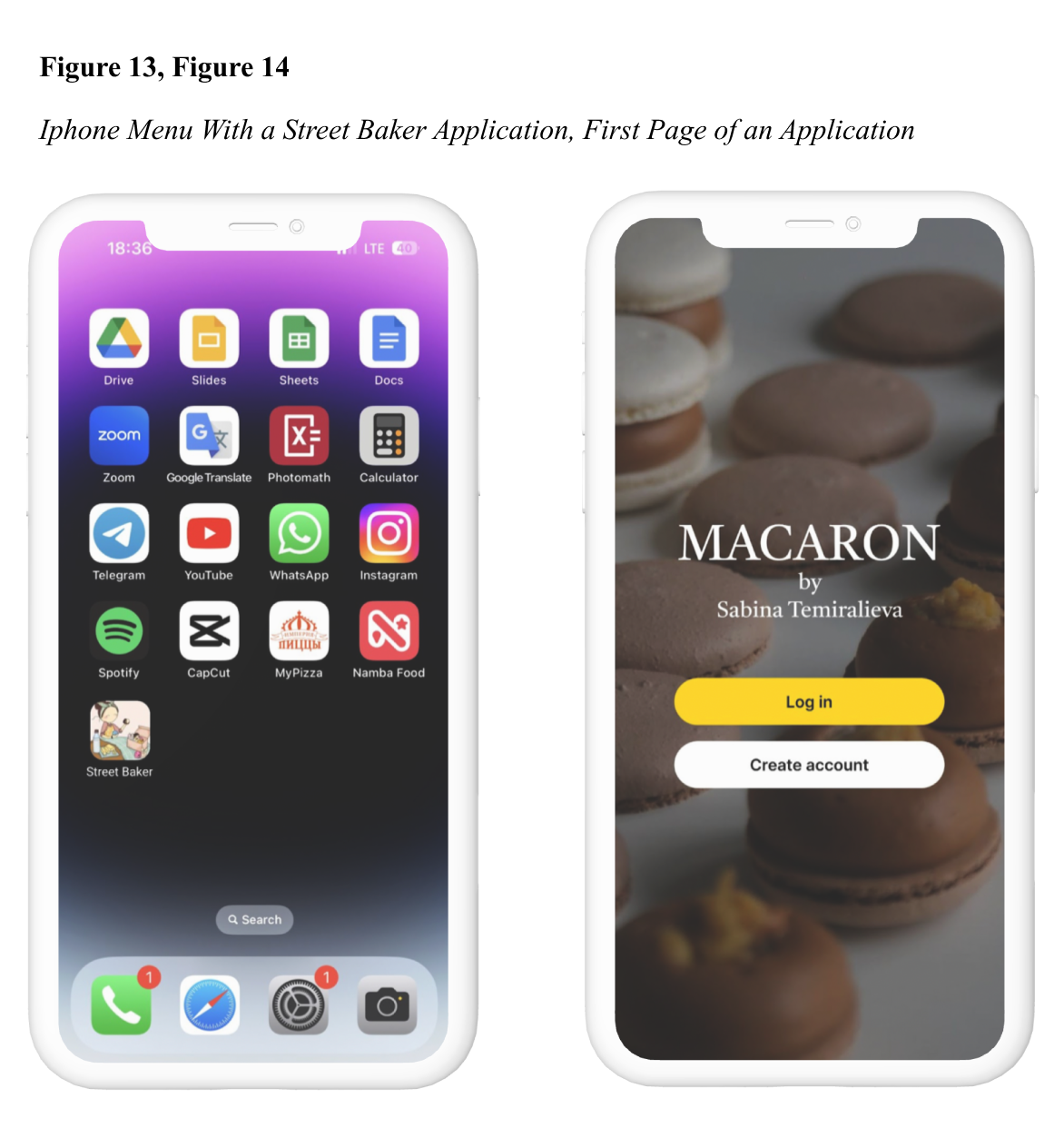
Ordering macarons after pizza has become a popular combo for all customers. As a popular place for citizens, Dodo Pizza has 6 branches and orders more than 500 macaroons per day. Therefore, ordering macarons from Street Baker is a daily basis in all Dodo Pizza’s branches. However, how the application will work considering all the features for the best ordering, you can see below.
User flow is a roadmap that helps the user starting from registration till the finish. The main goal is a user goal destination, which goes smoothly and friendly for the best user experience. It includes mobile screens, buttons and motion that push users along the way. By improving and optimizing user flow, applications will have intuitive and smooth experiences which facilitate users steps and accomplish what they want. Here you can see the main user flow of Street Baker company (Figure 15).
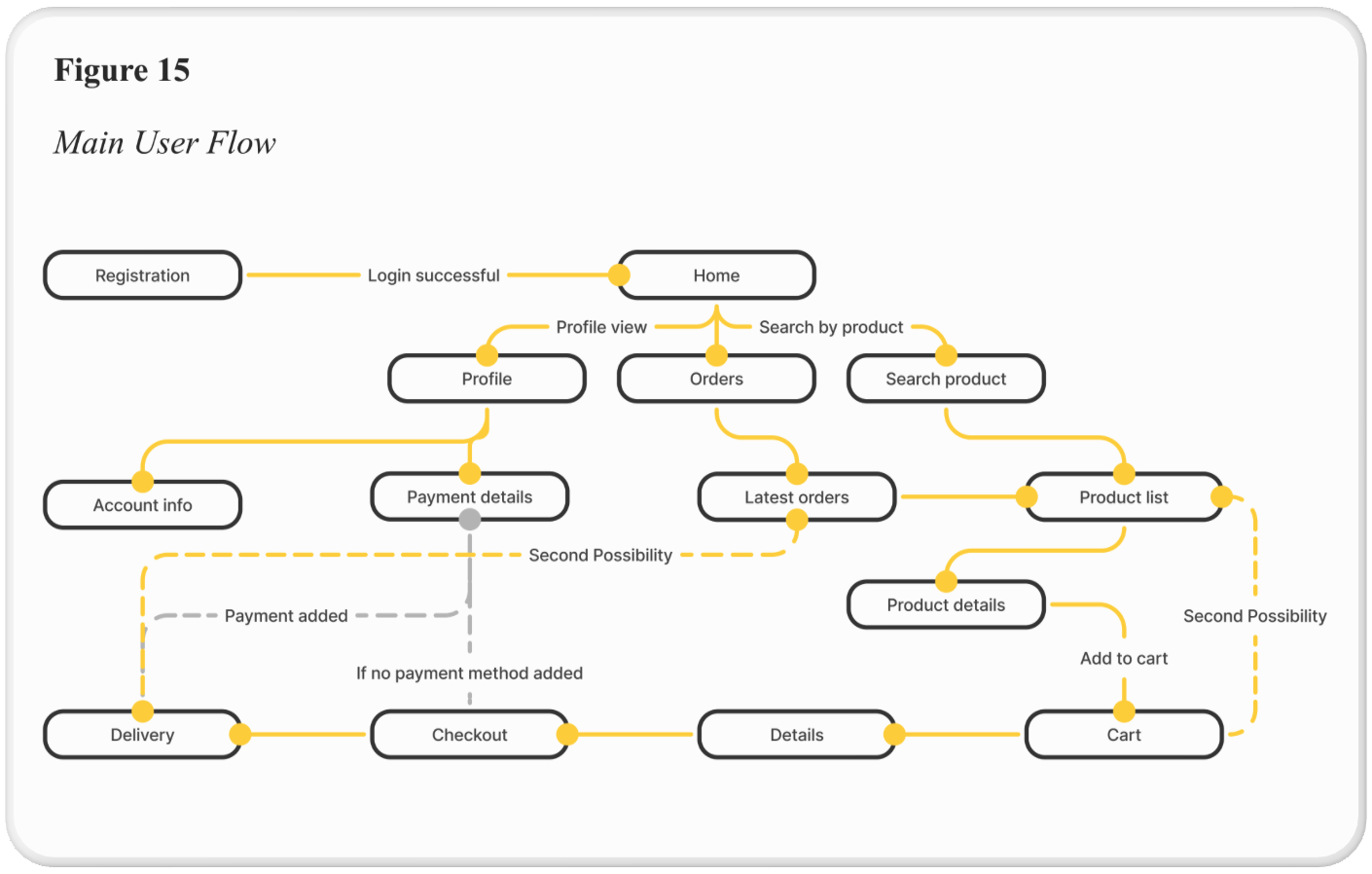
According to Figure 15, there is a main user flow of the mobile application with all main steps that users have to follow during ordering processes. Analyzing each step will help users to understand all the steps ordering processes. Main flow includes 10 steps and the description of each step is the following:
Registration or Login. The first step in any application is to create a new account or log in for an existing account to enter to the homepage.
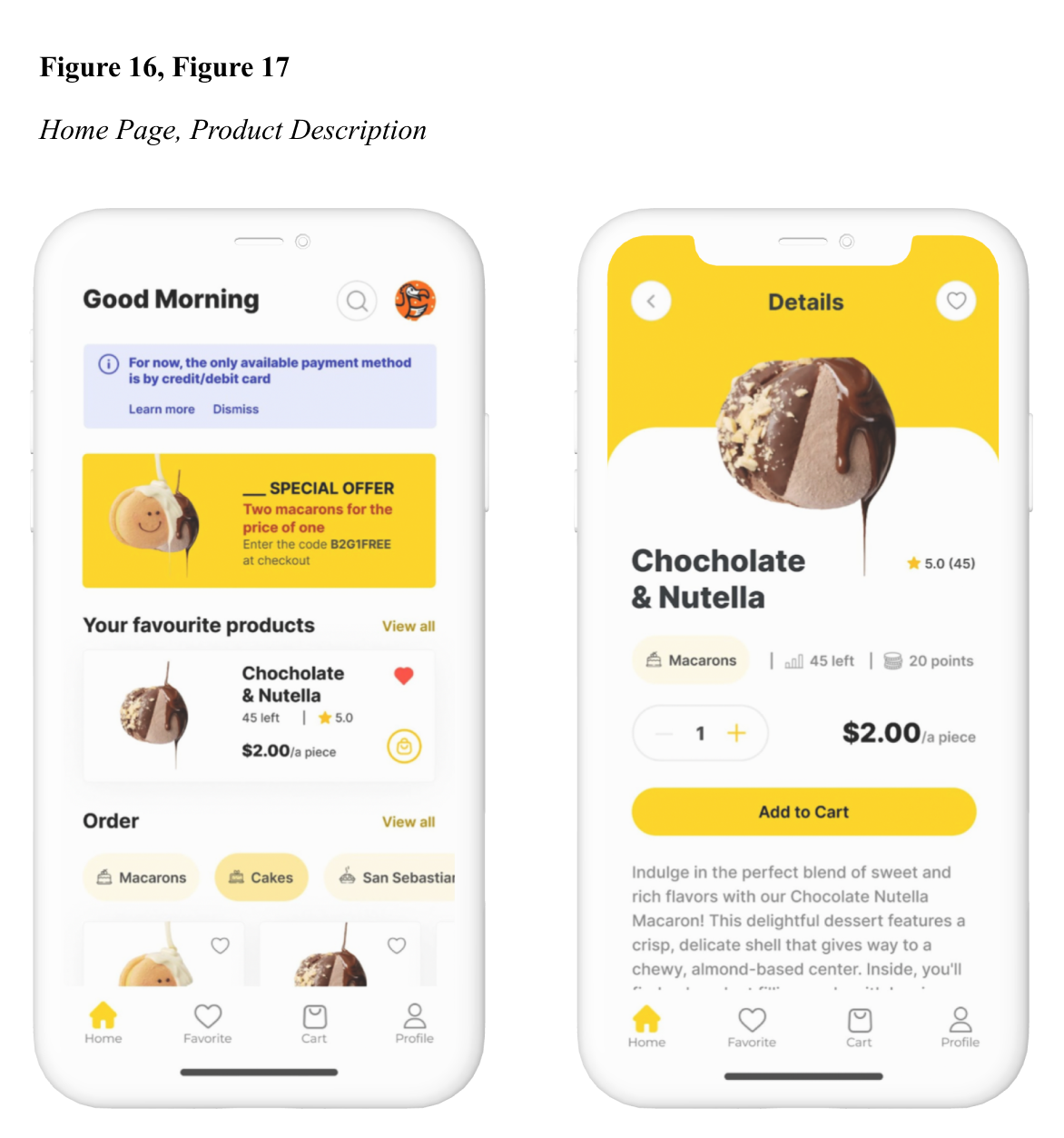
Browsing and Search. After passing the registration process, the user is redirected to the homepage that includes the product catalog as well. There are 2 actions: browsing through different categories or searching the specific product in the search functionality (Figure 16).
Product Selection. As the user finishes with searching the product, the next step is adding preferred products in a virtual shopping cart. Here you can edit products by quantity, size or any specific changes and check through all details (Figure 17).
Cart Management. Other details such as adding or removing, getting promotional codes or discounts you can apply in the cart management section.
Checkout Process. Great! Ready for the checkout process. It provides information about delivery and actions that users need to apply considering time, payment methods and other details (Figure 19).
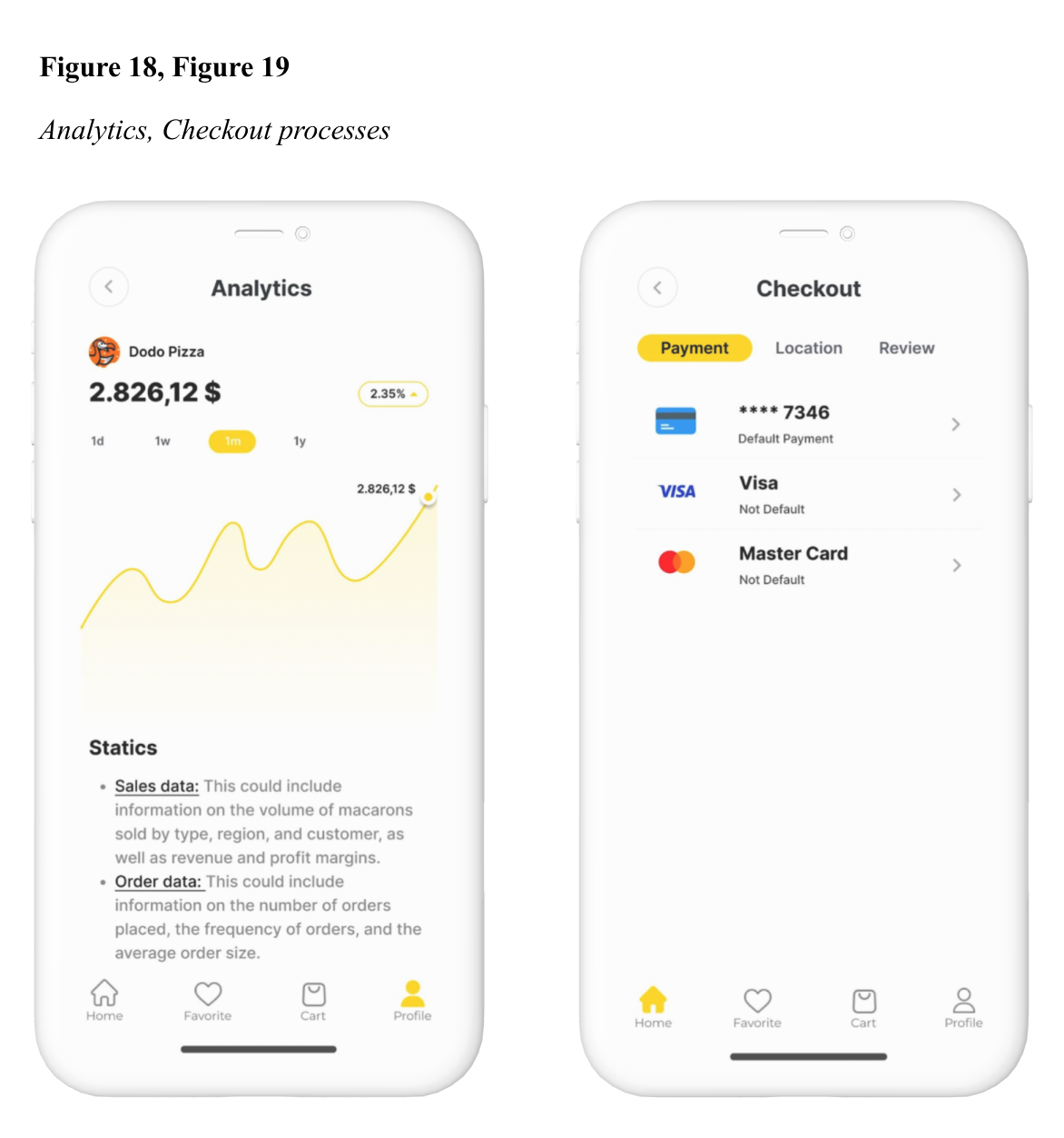
Payment. Almost done! Users need to fill in all payment details for instance credit card information or select the existing pairing card. Additionally, users can apply other methods, for example: online banking, etc.
Order Confirmation. In the finish line. Next the user directed in order confirmation that included all order information.
Order Tracking. As a benefit, users have a feature of checking their order status in real time. In this section, they can monitor the status, track delivery process and in addition receive mobile notifications for updates or other information.
Delivery and Collection. Users can receive their orders for home delivery, if the company has branches it will allow delivery through all the branches at once.
Feedback and Rating. After receiving, users can be prompted to send feedback on their user experience including rate in different sections such as quality of the product and application or give some comment related to the service received.
Analytics. New feature for special B2B users. It is to monitor all the products received and analyze through data and graphs for better understanding that help users in the financial and strategic parts of their companies (Figure 18).
Prediction
The product expects to see significant revenue growth and customer satisfaction after launching its mobile application.
The fully automated application will reduce errors and delays in order processing which is expected to lead to a 15% revenue increase for Street Baker in the first year.
Quick ordering will allow for faster processing and accuracy.
In the third year the product will continue to raise users' satisfaction. Using users feedback, the product will update and add new features to improve the ordering processes.
We expect a 30% increase of revenue over manual processing because more customers start to use the application for its best user experience.
In the end, the product reduces operational cost and increases revenue. Finally, the product will be fully automated and there will be no need in addition to manually checks which lead to savings.
We expect to see a 10% decrease in operational costs over the next year compared with manual processing.
This product has a big potential and significant growth. The application will work automatically that will allow Street Baker to reduce company costs and beyond improve customers satisfaction. Street Baker has to invest for this product as the application benefits in short and long term.